

Group 5 Pulmonary Hypertension (PH) is one of the rarest and least understood forms of pulmonary hypertension. It refers to high blood pressure in the lungs that develops due to multiple, complex, or unclear causes that do not fit neatly into other PH categories. Because of this complexity, Group 5 PH can be challenging to diagnose and manage, especially for patients and caregivers trying to understand what it means.
This article explains Group 5 Pulmonary Hypertension in clear, simple language. You will learn what it is, how it differs from other types of PH, possible causes, symptoms, diagnosis, treatment approaches, and what living with this condition may involve.
What Is Pulmonary Hypertension?
Pulmonary hypertension is a condition where the blood pressure in the arteries of the lungs is higher than normal.
Over time, this increased pressure:
- Makes the heart work harder
- Weakens the right side of the heart
- Reduces oxygen delivery to the body
Pulmonary hypertension is not the same as regular high blood pressure, which affects arteries throughout the body.
Doctors classify pulmonary hypertension into five groups based on the underlying cause. This helps guide diagnosis, research, and treatment decisions.
Understanding Group 5 Pulmonary Hypertension
Group 5 Pulmonary Hypertension includes cases where PH develops due to unclear, multifactorial, or overlapping mechanisms.
In simple terms:
- The cause is complex or not fully understood
- Several factors may contribute at the same time
- The condition does not fit clearly into Groups 1–4
Because of this, Group 5 PH is often referred to as “pulmonary hypertension with unclear or multifactorial mechanisms.”
How Group 5 Differs From Other Pulmonary Hypertension Groups

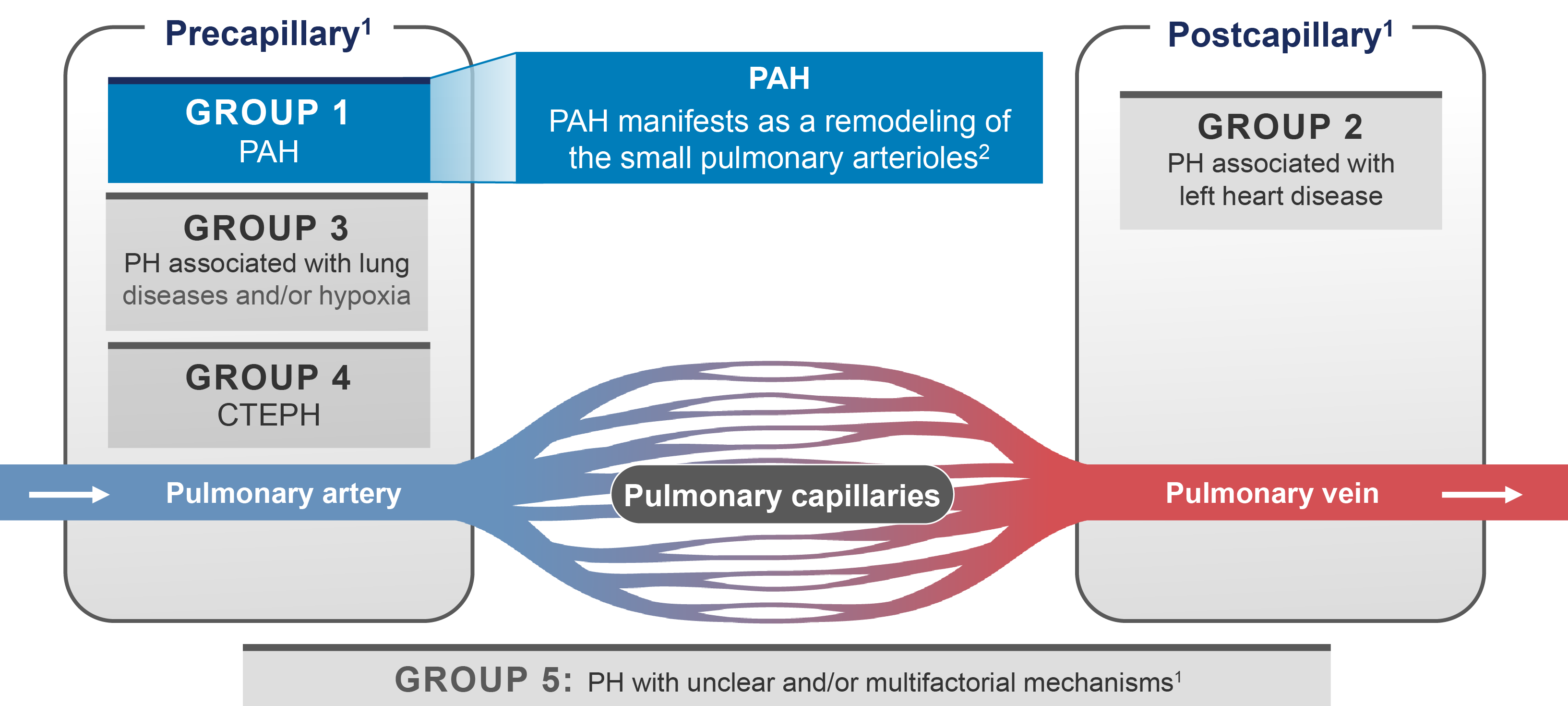
Here is a brief overview of how Group 5 compares to other PH categories:
Pulmonary Hypertension Groups at a Glance
- Group 1 – Pulmonary arterial hypertension (PAH)
- Group 2 – PH due to left heart disease
- Group 3 – PH due to lung disease or low oxygen
- Group 4 – PH due to chronic blood clots
- Group 5 – PH due to unclear or multiple causes
Group 5 stands apart because it does not have a single, well-defined disease mechanism.
Conditions Associated With Group 5 Pulmonary Hypertension
Group 5 PH may develop in association with several rare or complex conditions.
Commonly Associated Conditions
- Blood disorders
- Chronic hemolytic anemia
- Myeloproliferative diseases
- Systemic and inflammatory diseases
- Sarcoidosis
- Vasculitis
- Metabolic disorders
- Glycogen storage diseases
- Chronic kidney disease
- Especially in patients on long-term dialysis
- Other rare conditions
- Tumor-related blood vessel compression
- Fibrosing mediastinitis
Not everyone with these conditions develops pulmonary hypertension, but the risk may be higher.
Why the Causes Are Considered “Unclear”
In Group 5 PH, several mechanisms may act together, such as:
- Narrowing of lung blood vessels
- Compression of vessels from outside
- Abnormal blood flow or blood cells
- Inflammation and immune system effects
Because these factors overlap, it is often difficult to identify a single cause, making diagnosis and treatment more complex.
Symptoms of Group 5 Pulmonary Hypertension
Symptoms are similar to other types of pulmonary hypertension and often develop gradually.
Common Symptoms
- Shortness of breath, especially with activity
- Fatigue or weakness
- Chest discomfort or pressure
- Dizziness or fainting spells
- Swelling in the ankles, legs, or abdomen
- Rapid or irregular heartbeat
Symptoms may be mistaken for other conditions, especially early on.
When to Seek Medical Attention
You should seek medical evaluation if symptoms:
- Worsens over time
- Limit daily activities
- Occur alongside known chronic conditions
Early evaluation can help identify pulmonary hypertension before serious complications develop.
How Group 5 Pulmonary Hypertension Is Diagnosed
Diagnosing Group 5 PH requires a careful and step-by-step approach.
Common Diagnostic Tests
- Medical history and physical exam
- Echocardiogram (heart ultrasound)
- Blood tests
- Pulmonary function tests
- Chest imaging (CT scan or MRI)
- Right heart catheterization (gold standard test)
Doctors also focus on excluding other PH groups before diagnosing Group 5.
Challenges in Diagnosis
Diagnosis can be difficult because:
- Symptoms are nonspecific
- Underlying conditions may mask PH
- Standard PH treatments may not apply
For this reason, patients are often evaluated at specialized pulmonary hypertension centers.
Treatment Approaches for Group 5 Pulmonary Hypertension
There is no single standard treatment for Group 5 PH.
Management focuses on:
- Treating the underlying condition
- Managing symptoms
- Preventing complications
Possible Treatment Strategies
- Oxygen therapy (if oxygen levels are low)
- Diuretics to manage fluid retention
- Medications for heart support
- Treatment of associated diseases (such as sarcoidosis or anemia)
Pulmonary arterial hypertension–specific drugs may be used cautiously in select cases, but they are not routinely recommended.
Why Treatment Is Individualized
Each person with Group 5 PH has:
- Different underlying causes
- Different disease severity
- Different responses to treatment
As a result, care plans are highly personalized and require close medical supervision.
Living With Group 5 Pulmonary Hypertension
Living with Group 5 PH can be challenging, but many people manage their condition with proper care and support.
Lifestyle Considerations
- Follow medical advice consistently
- Maintain gentle physical activity if approved by a doctor
- Avoid smoking and secondhand smoke
- Eat a balanced, heart-healthy diet
- Monitor symptoms regularly
Emotional and psychological support is also important.
Possible Complications
If not properly managed, Group 5 PH may lead to:
- Right-sided heart failure
- Reduced exercise capacity
- Increased hospitalizations
Early diagnosis and ongoing care can help reduce these risks.
Prognosis and Outlook
The outlook for Group 5 Pulmonary Hypertension varies widely.
Prognosis depends on:
- The underlying condition
- Severity of pulmonary hypertension
- Response to treatment
- Overall health
Because research is ongoing, understanding and management of Group 5 PH continue to improve.
Research and Ongoing Studies
Group 5 PH is an active area of research.
Current studies focus on:
- Better understanding disease mechanisms
- Identifying targeted treatments
- Improving diagnostic tools
Patients may benefit from care at centers involved in PH research.
Frequently Asked Questions (FAQs)
What makes Group 5 Pulmonary Hypertension different?
Group 5 PH is caused by unclear or multiple mechanisms, unlike other groups that have more defined causes.
Is Group 5 Pulmonary Hypertension rare?
Yes, it is considered one of the rarest PH categories.
Can Group 5 Pulmonary Hypertension be cured?
There is no known cure, but symptoms and complications can often be managed.
Is Group 5 PH life-threatening?
It can be serious, especially if untreated, but outcomes vary depending on the underlying condition and care.
How is Group 5 PH treated?
Treatment focuses on managing the underlying disease and symptoms, rather than a single standard therapy.
Can lifestyle changes help?
Lifestyle measures support overall health but do not replace medical treatment.
Should patients see a specialist?
Yes, evaluation at a pulmonary hypertension specialty center is often recommended.
Key Takeaways
- Group 5 Pulmonary Hypertension involves complex or unclear causes
- Symptoms often develop gradually and may be overlooked
- Diagnosis requires careful evaluation and exclusion of other PH types
- Treatment is individualized and focuses on underlying conditions
- Ongoing research continues to improve understanding and care
Disclaimer: This content is for educational purposes only and is not a substitute for professional medical advice.

Catherine Bell is a medical student who writes plain-language guides to lung conditions and tests for PulmonaryGuide. Her articles are reviewed by a doctor on our team before publication.
More articles by Catherine →

